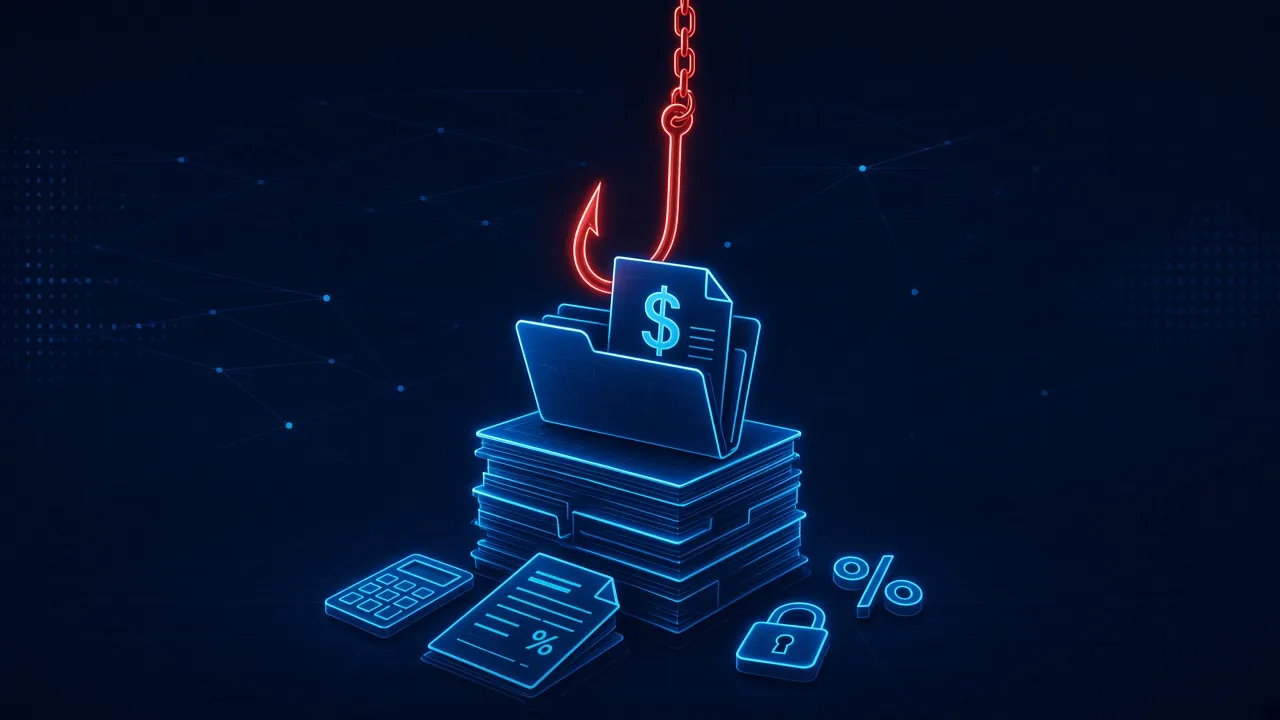
Accounting firms have something cybercriminals want badly: access to sensitive financial information.
Tax returns. Social Security numbers. Bank account information. Payroll records. Business financials. Investment information. Client credentials. The list goes on. A single client folder at a mid-sized firm can contain everything a criminal needs to commit identity theft, file a fraudulent refund claim, or impersonate a business in a payment fraud scheme.
The past two years have shown what happens when that access is compromised, at every size of firm. In July 2026, Ernst & Young confirmed that an unauthorized party had accessed a third-party IT service management platform used to support client tax work, downloading documents that included client names, Social Security numbers, account numbers, and credit and debit card numbers, according to ComplexDiscovery’s reporting (https://complexdiscovery.com/shinyhunters-july-31-deadline-for-ey-arrives-after-third-party-tax-data-breach/) on the breach and the extortion listing that followed. At the other end of the market, a small California CPA firm disclosed in May 2026 that attackers had compromised its email environment during the height of tax season, exposing Social Security numbers, dates of birth, and medical information, as detailed in FinSecLedger’s analysis (https://finsecledger.com/article/smith-james-cpas-breach-analysis) of the incident. The likely entry point was not a firewall failure. It was an email account takeover, the kind that typically begins with an employee entering credentials on a convincing fake login page.
The scale of the problem is not anecdotal. The IRS reported that in the first half of 2025 alone (https://www.irs.gov/newsroom/security-summit-irs-reminds-tax-pros-to-guard-against-identity-theft-as-summer-series-wraps-up), nearly 300 data breaches were reported by tax professionals, impacting as many as 250,000 clients.
And while accounting firms continue to strengthen their technical cybersecurity defenses, attackers are increasingly looking for a way around those defenses.
That way is often a person.
The Accountant Is Becoming the Attack Surface
Cybersecurity has traditionally focused on protecting technology.
Firewalls protect networks. Endpoint detection protects computers. Email security filters suspicious messages. Multi-factor authentication protects accounts. These technologies are critical, and firms that handle taxpayer data are required to have many of them in place.
But none of them eliminate one of the biggest risks facing an accounting firm: a trusted employee making the wrong decision when presented with a convincing request. The IRS estimates that 91 percent of all data breaches and cyberattacks begin with a spear phishing email (https://www.irs.gov/identity-theft-central/identity-theft-information-for-tax-professionals) that targets a person, not a system.
That is where social engineering comes in. Social engineering attacks do not necessarily require an attacker to break through a technical security control. Instead, they manipulate a person into doing something that creates the access the attacker needs:
- click a link
- open a document
- share credentials
- approve a login
- change payment information
- send a file
- respond to what appears to be a legitimate client
The attacker does not always need to defeat the security system. They need to convince someone to use it against themselves.
Accounting Firms Are Prime Targets, and the IRS Keeps Saying So
This is not a hypothetical concern raised by security vendors. In August 2026, the IRS and its Security Summit partners issued a renewed warning to tax professionals (https://www.irs.gov/newsroom/security-summit-warns-tax-pros-to-watch-out-for-phishing-emails-and-other-attacks) about schemes designed to steal sensitive taxpayer data. The agency specifically named five threats aimed at tax pros: phishing, targeted spear phishing, clone phishing that copies a legitimate email and swaps in a malicious link, whaling aimed at leaders and payroll or finance staff, and “new client” scams.
The reason accounting firms keep appearing in these warnings is simple.
Accounting professionals sit on large amounts of valuable information. A compromised email account can provide an attacker with access to years of client communications, tax returns, and financial records. A compromised tax professional’s credentials can also be used to file fraudulent returns and pursue additional victims, because clients trust messages that come from their accountant’s real address.
For an attacker, compromising one employee can be far more valuable than attacking one computer.
Regulators have drawn the same conclusion. Under the Gramm-Leach-Bliley Act and the FTC Safeguards Rule, tax and accounting professionals are considered financial institutions regardless of size, and every firm is required to implement and maintain a written information security plan, as laid out in IRS Publication 5708 (https://www.irs.gov/pub/irs-pdf/p5708.pdf). A security event affecting 500 or more people must be reported to the FTC within 30 days of discovery. The compliance obligation is real, but a plan on paper does not stop an employee from clicking a convincing link on a busy Tuesday in March.
The “New Client” Problem
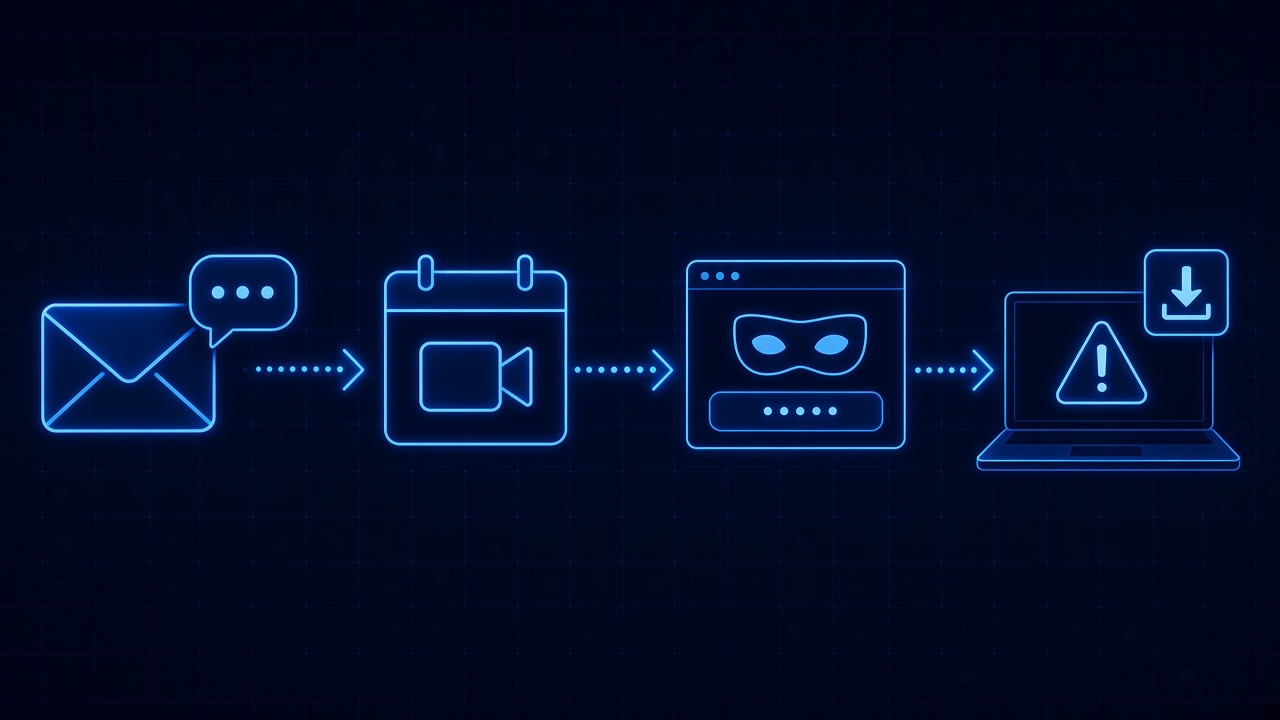
Consider one of the attacks specifically highlighted by the IRS: the new client scam. An accounting professional receives an email from someone who appears to be a prospective client. They need help with their taxes. They have documents ready. They provide a link or attachment.
The request does not necessarily look suspicious. In fact, it looks like exactly the type of communication an accountant might receive during a busy tax season.
A documented case from this year shows how patient these operations have become. In a June 2026 incident response documented by CyberHoot (https://cyberhoot.com/wp-content/uploads/2026/07/CyberHoot_Threat_Advisory_CH-TA-2026-0001_v1.0.pdf), an attacker posing as a prospective tax client first contacted a U.S. CPA firm through the firm’s own website contact form, built rapport over several weeks, and then scheduled a “tax meeting.” The meeting invitation contained a link whose visible text read teams.microsoft.com, but the real hyperlink led to a fake device enrollment page. One click enrolled the workstation into an attacker-controlled device management tenant, which ran scripts with system-level privileges and attempted to install remote-access tooling. The firm’s endpoint security caught the follow-on steps, but the attacker got that far without ever touching a firewall.
That is what makes social engineering so effective. The employee is not making an obviously bad decision. They are making a reasonable decision based on manipulated information: a weeks-old relationship, a scheduled meeting, and a link that displayed a legitimate address.
And that distinction matters.
It Is Not Just Email Anymore
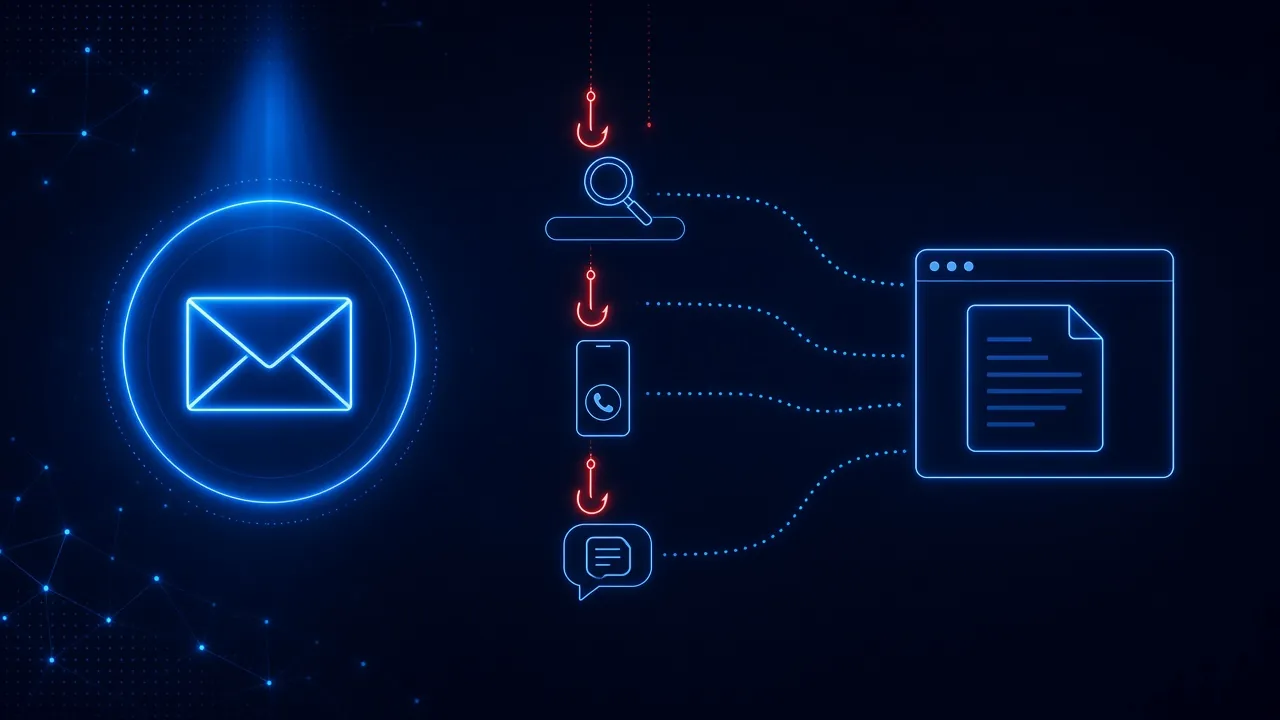
The pressure on the human layer is also arriving by phone. An August 2026 analysis in CPA Practice Advisor (https://www.cpapracticeadvisor.com/2026/08/31/how-accounting-firms-can-protect-against-the-rising-threat-of-vishing/189278/) warned that voice phishing is now a practice management issue for accounting firms, pointing to Bloomberg reporting that attackers used AI-generated voice cloning to impersonate trusted colleagues at major investment firms and convince staff to grant system access. The same article notes the precedent every security leader remembers: a single vishing call to an IT help desk started the 2023 breach that cost MGM Resorts an estimated $100 million.
We covered this shift in detail in our analysis of how attackers call employees and walk them into the attack. The pattern applies directly to accounting firms: the phone call, the friendly new client thread, or the fake IT support chat is the setup. The decisive step is the credential entry, the meeting link, the file download, or the software install that follows, and it almost always happens in the browser.
The Problem With Traditional Security Awareness Training
Most employees at accounting firms have already been trained on this. They have sat through security awareness courses, they know not to click suspicious links, and many can even recite the classic warning signs: urgency, impersonation, unexpected attachments. On paper, the awareness box is checked.
But knowing what to look for does not guarantee that someone will recognize an attack when it actually appears in their inbox. Imagine an employee who completes phishing training in January. Six months later, an email arrives that appears to come from a long-term client. The message references a real project, the sender’s name is familiar, the timing makes sense, and there is a document waiting to be reviewed. Nothing about it resembles the obviously fake examples from the training module, so nothing triggers suspicion, and the employee clicks.
This is where traditional training reaches its limitation: the training happened months ago, but the decision is happening right now, in the middle of a workday, under deadline pressure. Attackers understand this gap and deliberately time their campaigns for the moments when accountants are busiest and most likely to move fast, such as filing deadlines, extension season, and payroll runs. The California CPA firm breach mentioned above happened in early March, at the height of tax season, and security analysts noted that the timing was likely not a coincidence.
What If Security Could Help at the Moment of Decision?
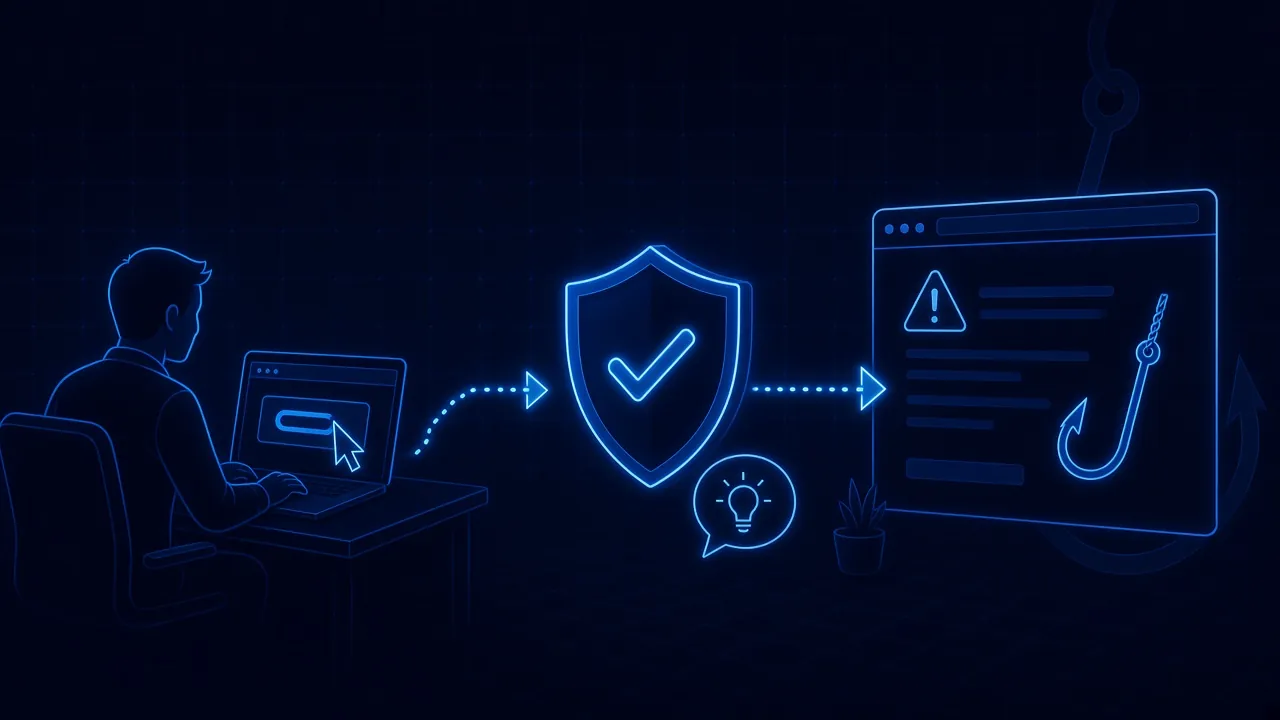
This is where a protection-first approach can make a difference. Instead of relying entirely on employees to identify every social engineering attack themselves, technology can analyze behavior as it happens: the link being visited, the page requesting credentials, the file being downloaded. When risky behavior is detected, the system can intervene before the action becomes an incident, and then, instead of simply telling the employee they did something wrong, deliver a short lesson explaining what happened and why the action was dangerous.
That sequence, protect first and teach second, is a different model for security awareness. The employee gets protection at the exact moment they need it, and education grounded in something they actually experienced rather than a hypothetical. It is the same argument we have made about why phishing protection cannot end at the inbox: the email filter never sees the link that arrives through a website contact form reply, a Teams message, or a text. The browser is where the risky action actually happens, so the browser is where protection needs to live.
Turning Mistakes Into Learning Opportunities
One of the most powerful aspects of this approach is the feedback loop it creates. A traditional training program can only offer generic advice like “be careful with suspicious links.” A protection-first system can say something far more useful: “the link you just attempted to access showed indicators of social engineering, and here is what we detected and why the action was risky.”
The difference is context. The employee is not learning from an abstract example in a slide deck; they are learning from their own decision, seconds after they made it, while the situation is still fresh in their mind. That creates a much stronger connection between the threat and the lesson than an annual course ever could, and it turns what would have been a security incident into a moment of genuine, memorable education.
Protecting More Than Just the Employee
The goal is not simply to create employees who are better at spotting phishing emails. The goal is to create an accounting firm that is harder to compromise, because every risky action that gets interrupted is a potential incident that never happens. A single protected interaction can prevent:
- credential theft and unauthorized account access
- malware infections and client data exposure
- business email compromise and fraudulent payment requests
- compromise of tax software and e-filing systems
- attacks launched against clients through a compromised employee account
That last item deserves emphasis. When a tax professional’s account is compromised, the attacker inherits the trust of every client relationship in that mailbox. The IRS warns that stolen practitioner credentials are used to file fraudulent returns in clients’ names, and the breach notification obligations, state attorney general filings, and potential FTC penalties all follow the firm, not the attacker. Because accounting firms often hold decades-long relationships, protecting the firm ultimately means protecting the businesses and families who trust it with their financial lives.
Security Should Not Depend on Perfect Employees
This is the underlying shift in thinking. The answer to social engineering is not to expect employees to become cybersecurity experts, because employees have jobs to do: accountants need to serve clients, tax professionals need to prepare returns, payroll teams need to process payroll, and partners need to manage the business. Cybersecurity should support those people rather than simply piling more responsibility onto them.
A strong security program starts from the assumption that people will occasionally make mistakes, especially in March and April when workloads peak and attackers know it. The objective is to make those mistakes less damaging: make the right decision easier, and make the dangerous decision harder to complete.
The Human Layer Needs Protection Too
Accounting firms have spent years building layers of technical security around their organizations, and regulators have made much of that investment mandatory. It is time to give the human layer the same consideration, because the most sophisticated security infrastructure in the world can still be undermined by one convincing email, one patient “new client,” or one AI-cloned voice on the phone. And as AI makes these lures cheaper and more convincing, the volume and quality of attacks on accounting professionals will only increase.
The answer is not to blame the employee. It is to recognize that attackers are deliberately targeting human decision-making and to build security around that reality. Accounting firms do not just need to protect their networks; they need to protect their data, their clients, and, increasingly, the people making the decisions that connect all three.
Because when the attacker is targeting the human decision, the human layer needs a security layer of its own.
How SavvyShield helps: SavvyShield puts the protection-first model described in this article into practice. It operates where employees actually make decisions, in the browser and email environment, analyzing actions for indicators of social engineering and blocking risky actions before they become incidents. Each intervention is followed by a short, targeted lesson based on the exact situation the employee encountered, reinforced over time with realistic simulations and adaptive human risk management.