Phishing protection
Phishing Protection That Doesn't Stop at the Inbox
Email filters catch messages. SavvyShield protects people. Real-time phishing protection in the browser detects suspicious websites, fake login pages, and social engineering, and steps in before a risky action becomes a compromise.
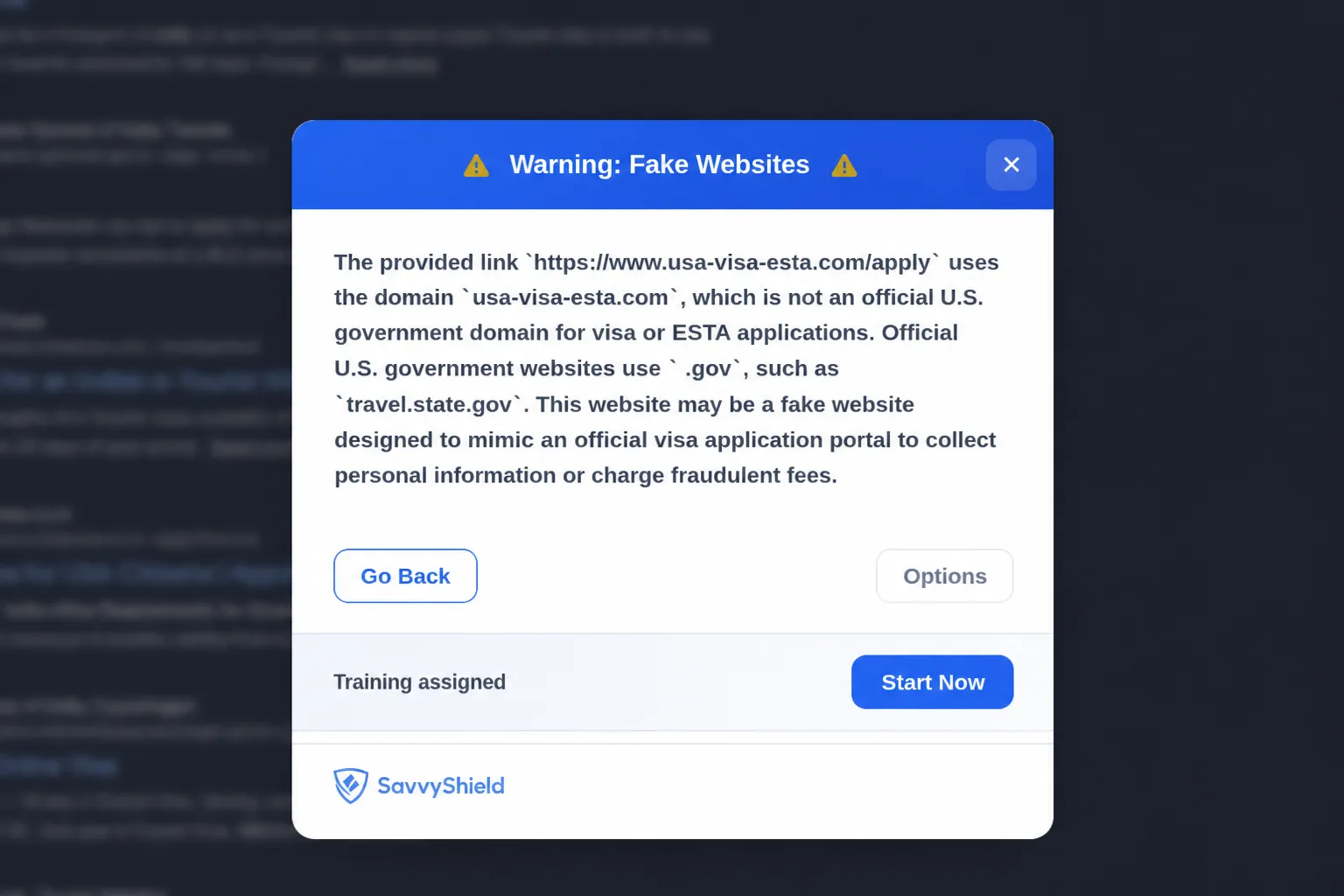
- Stops fake login pagesSpots login pages that imitate trusted brands and steps in before credentials are submitted.
- Catches brand-new domainsEvaluates pages as employees encounter them, even domains too new to have a bad reputation.
- Explains every catchContextual warnings say what was detected and why, so each save builds instincts.
Interactive demo
Try it: click the trap
Pick an attack and fall for it. You’ll see the warning your people see, why the page was flagged, and the short lesson that follows.

- DetectScans the page the moment it opens
- BlockStops the risky step before it happens
- ExplainSays exactly what it caught and why
- TrainAssigns a short lesson automatically
This is a mock attack. Go ahead and fall for it.
The problem
A Modern Phishing Attack Rarely Ends in the Inbox
Most phishing defenses concentrate on one place: email. But the dangerous part of a phishing attack usually happens after the message is delivered, and increasingly the lure does not arrive by email at all.
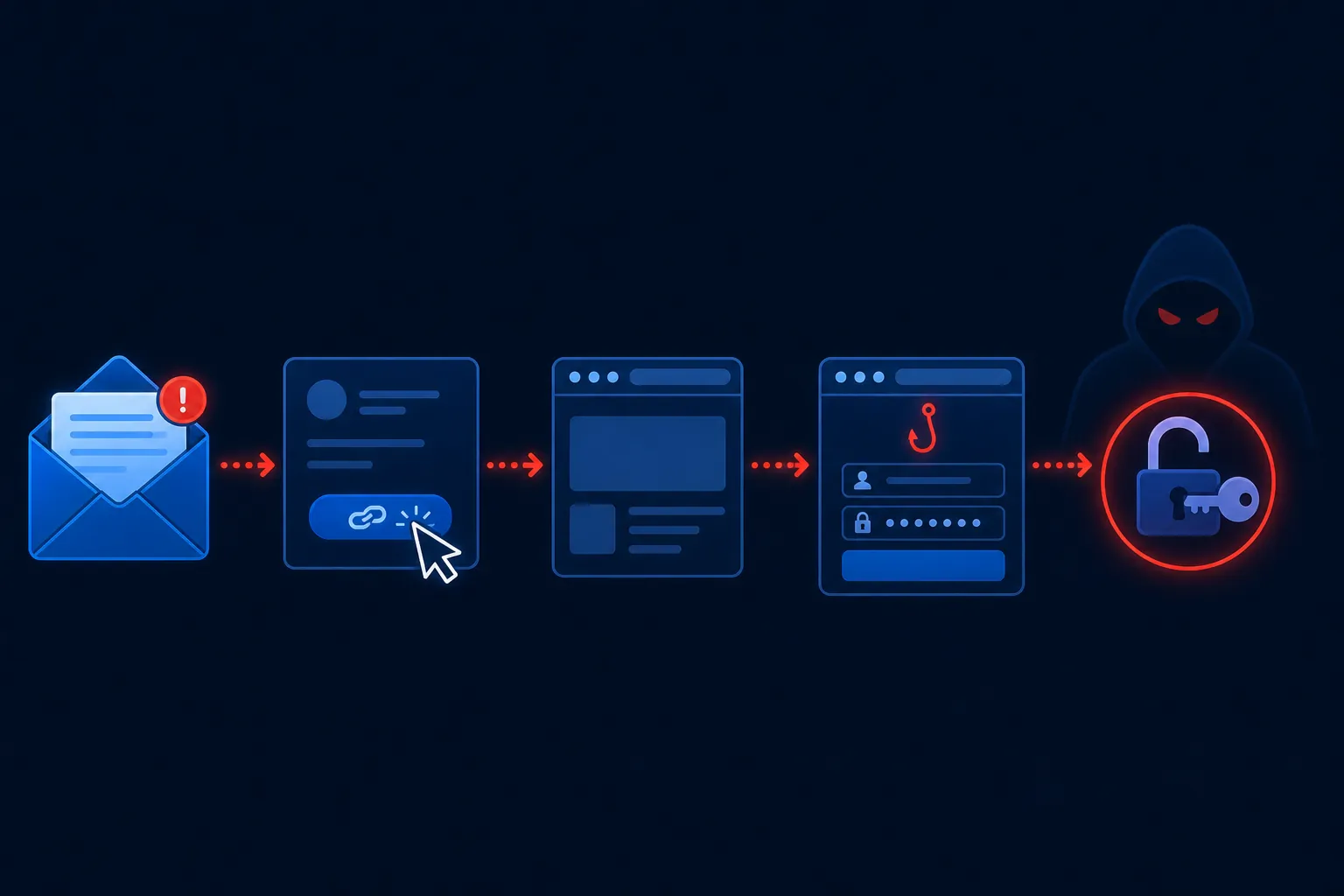
A typical attack progresses through a sequence: the lure, the click, the browser, and finally a fake login page that hands credentials to the attacker.
The compromise happens at the end of that chain, in the browser, when an employee enters credentials on a fake login page, approves access, or downloads a malicious file. Email security filters the beginning of the chain. It cannot see the end.
Lures now arrive through collaboration tools, search ads, QR codes, calendar invites, shared documents, and compromised accounts. Whatever the channel, they converge on the same destination: a convincing page in the browser asking the employee to act.
The SavvyShield approach
Real-Time Phishing Protection in the Browser
SavvyShield protects employees at the point of decision. It works alongside your existing email security rather than replacing it, adding a protective layer where risky actions actually happen.
- Suspicious and malicious websites. Pages are evaluated as employees encounter them, including new domains that have not yet built a bad reputation.
- Fake login pages and credential risk. SavvyShield identifies login experiences that imitate trusted brands and steps in before credentials are submitted.
- Social engineering patterns. Urgency cues, impersonation, and other manipulation techniques are flagged in the flow of work.
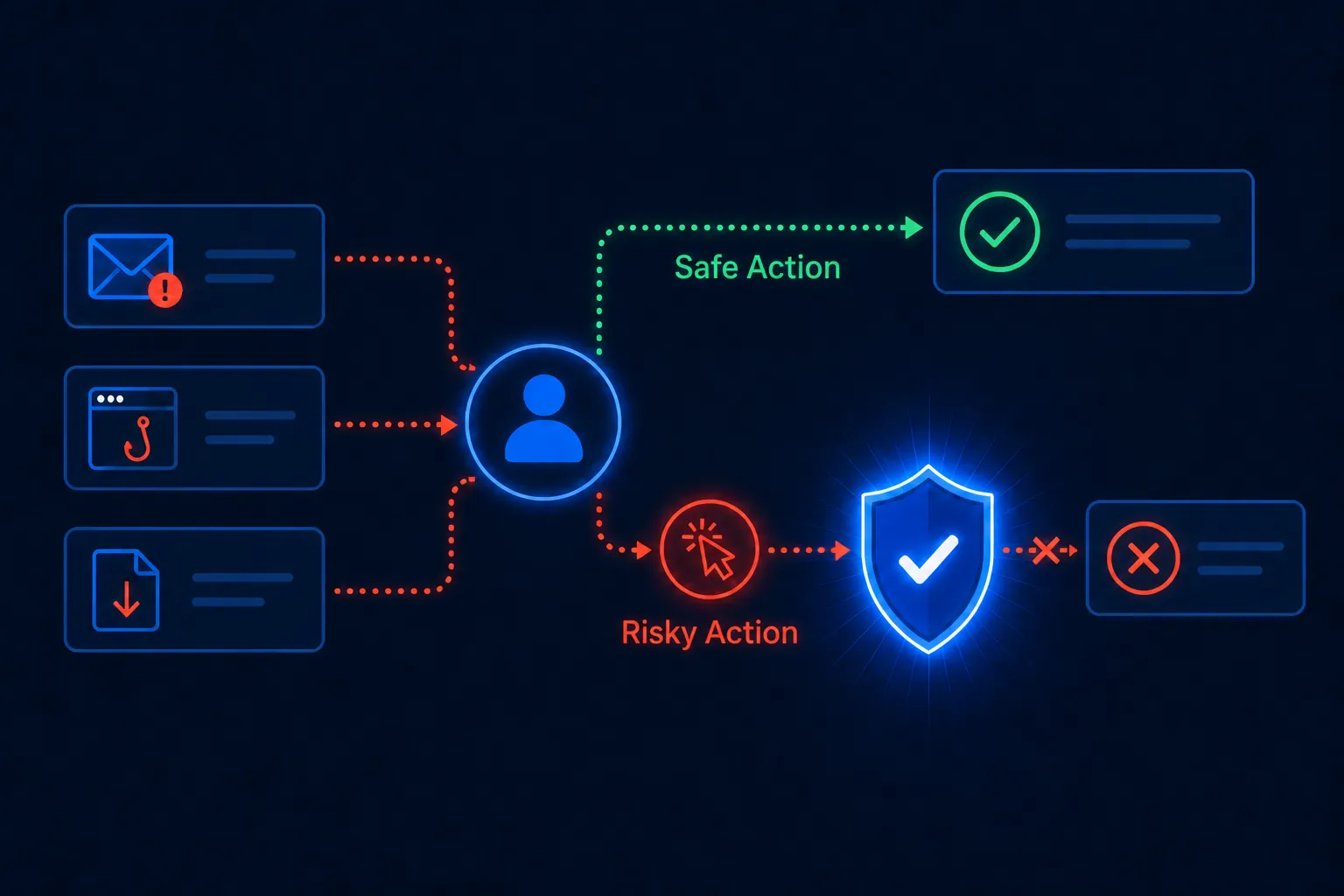
- Risky browser actions. Interrupts dangerous clicks and submissions as they happen instead of reporting them after the fact.
When SavvyShield intervenes, it does not just block. Contextual warnings explain what was detected and why it is dangerous, so every intervention also builds the employee's instincts for the next attempt.
Why it matters
Why Protection at the Point of Decision Changes Outcomes
Employees are not security analysts. They move fast, work across dozens of applications, and encounter legitimate password resets, invoices, and document requests every day. Expecting them to spot every fake, every time, is not a strategy.
Attackers also change infrastructure constantly. New phishing domains appear faster than reputation systems can catalog them, and AI-generated phishing has removed the spelling and grammar tells employees were taught to look for.
Browser-level protection narrows the gap between an employee's mistake and an organization's compromise. A click no longer has to become an incident, because there is still a protective layer between the click and the credential.
Part of a loop
Protection That Feeds Simulation and Training
Every real threat SavvyShield encounters makes the rest of the platform smarter. Detected attack patterns inform adaptive phishing simulations, so employees practice against the techniques actually being used. And every intervention can trigger security awareness training in context, a short lesson delivered while the risky moment is still fresh.
This is the core of the SavvyShield model: protect first, then train. Employees stay safe while they are still learning, and every moment of risk becomes a moment of improvement.
Explore the platform
One loop, four ways to cut human risk
Protection catches real threats, simulations test, lessons teach, and measurement shows what changed. Each part makes the next one smarter.
- Defense in real timeBlocks risky actionsSpots social engineering as it happens and steps in before the click becomes an incident.You are here
- Short micro lessonsTrains in the momentA two-minute lesson lands right after a risky moment, tied to exactly what happened.
- Adaptive by designLearns your weak spotsAI maps where each person is exposed and aims realistic simulations right there.
- Zero workloadAutomates everythingNo campaigns, scheduling, or content calendar. Your team gets the results without the work.