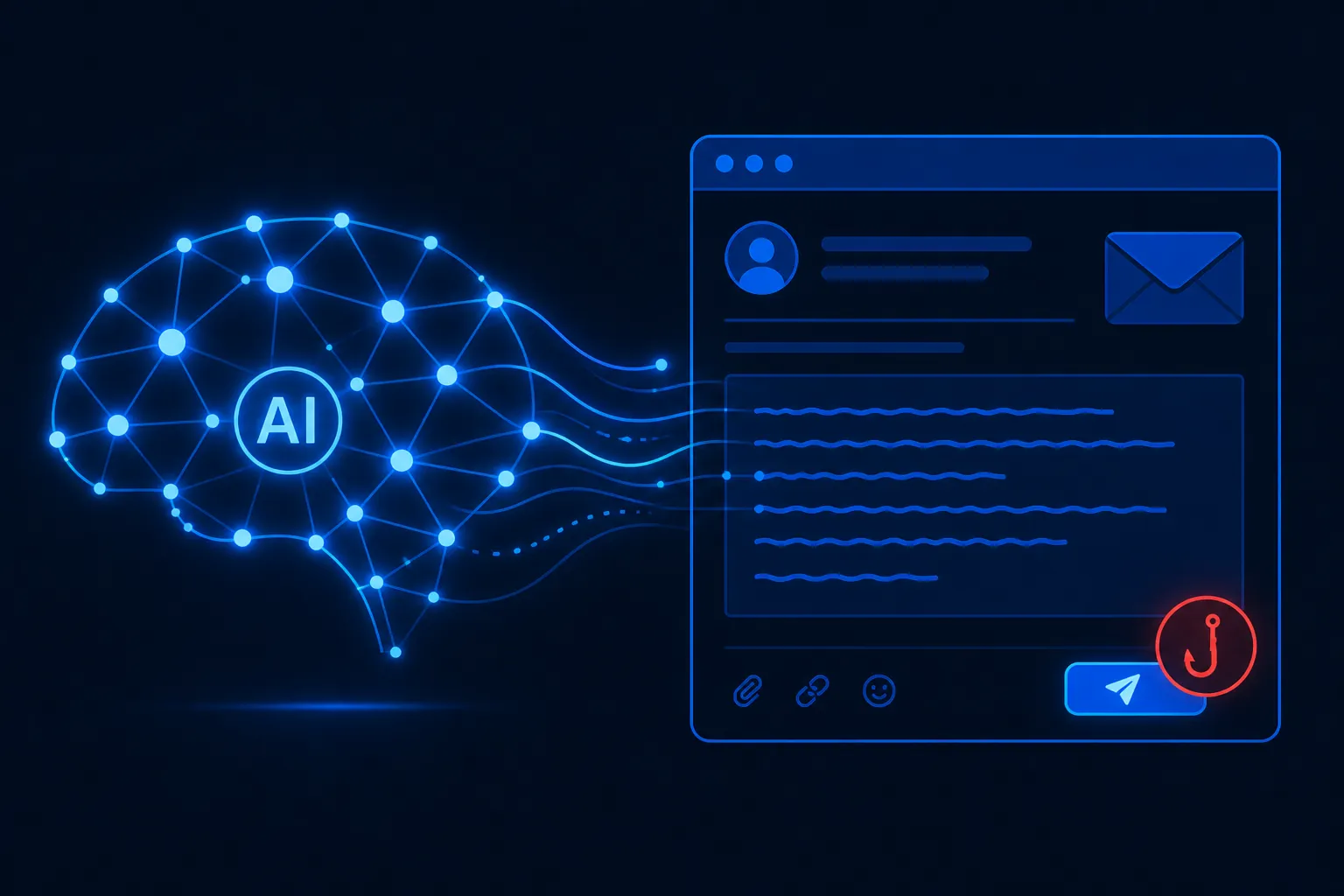
For decades, phishing had a quality problem. The typos, the awkward phrasing, the generic greetings: these were the tells that gave attacks away, and they were exactly what security awareness programs taught employees to spot. Generative AI erased them almost overnight.
This guide covers what AI phishing is, what the data says about how effective it has become, real incidents that show where it is heading, and what organizations can actually do about it.
What Is AI Phishing?
AI phishing is the use of artificial intelligence, especially generative AI, to create, personalize, and scale phishing attacks. Attackers use the same language models that power legitimate writing tools to produce convincing emails, messages, and websites, and to tailor them to specific companies, roles, and individuals.
The technology did not invent phishing. It removed phishing's biggest historical weaknesses: bad writing, generic content, and the effort required to personalize an attack. IBM's Cost of a Data Breach Report estimates that generative AI has cut the time needed to craft a convincing phishing email from roughly 16 hours of human effort to about 5 minutes. What used to be a skilled, manual craft is now a commodity.
How Effective Is AI Phishing? What the Data Says
For a while, defenders took comfort in the idea that AI-generated lures were still worse than human-crafted ones. That is no longer true, and the reversal happened fast.
- AI phishing now beats human experts. A longitudinal study by Hoxhunt spanning more than 70,000 live simulations found that AI-generated spear phishing was 31% less effective than elite human red teams in 2023. By March 2025 it had crossed over, outperforming the human experts by roughly 24% (Cloud Security Alliance research note).
- Recipients click far more often. Microsoft's Digital Defense Report 2025 measured a 54% click-through rate on AI-generated phishing messages, compared with 12% for manually written equivalents: a 4.5x effectiveness advantage (coverage via The Register).
- The economics favor the attacker. The same Microsoft report estimates AI can make some phishing operations up to 50 times more profitable, because personalization that once required hours of research per target is now automated.
- Attackers are adopting it. IBM reports that 16% of breaches in 2025 involved attacker use of AI, with phishing and deepfake impersonation as the two most common AI-enabled tactics.
The takeaway is uncomfortable but clear: the average phishing email an employee receives is getting better, faster, than the average employee's ability to spot it.
Personalization at Mass Scale
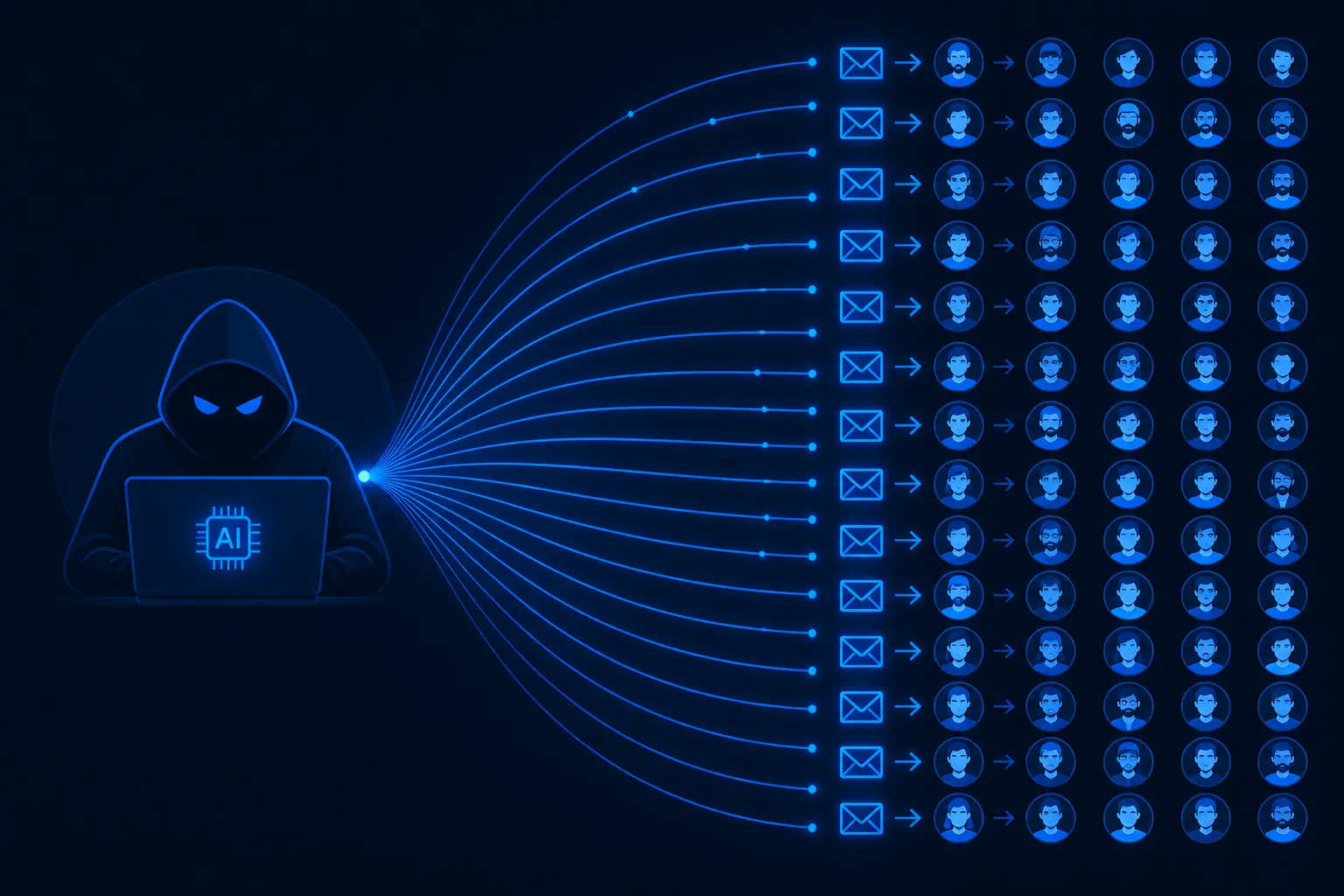
The most important shift is not quality alone. It is quality at volume. Spear phishing, the carefully researched attack tailored to one person, used to be reserved for high-value targets because it was expensive to produce. Generative AI collapsed that cost.
An attacker can now scrape a company's website, press releases, LinkedIn profiles, and public records, then generate a unique, contextually accurate lure for every employee at once: the right project names, the right vendor relationships, the right tone for that industry. Every organization is now worth an attacker's time, including the small ones that used to be protected by their own obscurity. We saw this dynamic play out in the July 2026 attacks on America's water utilities, where small, thinly staffed operations were targeted with polished, personalized lures that looked nothing like the clumsy mass phishing their training had prepared them for.
Beyond Email: Deepfakes and Voice Cloning
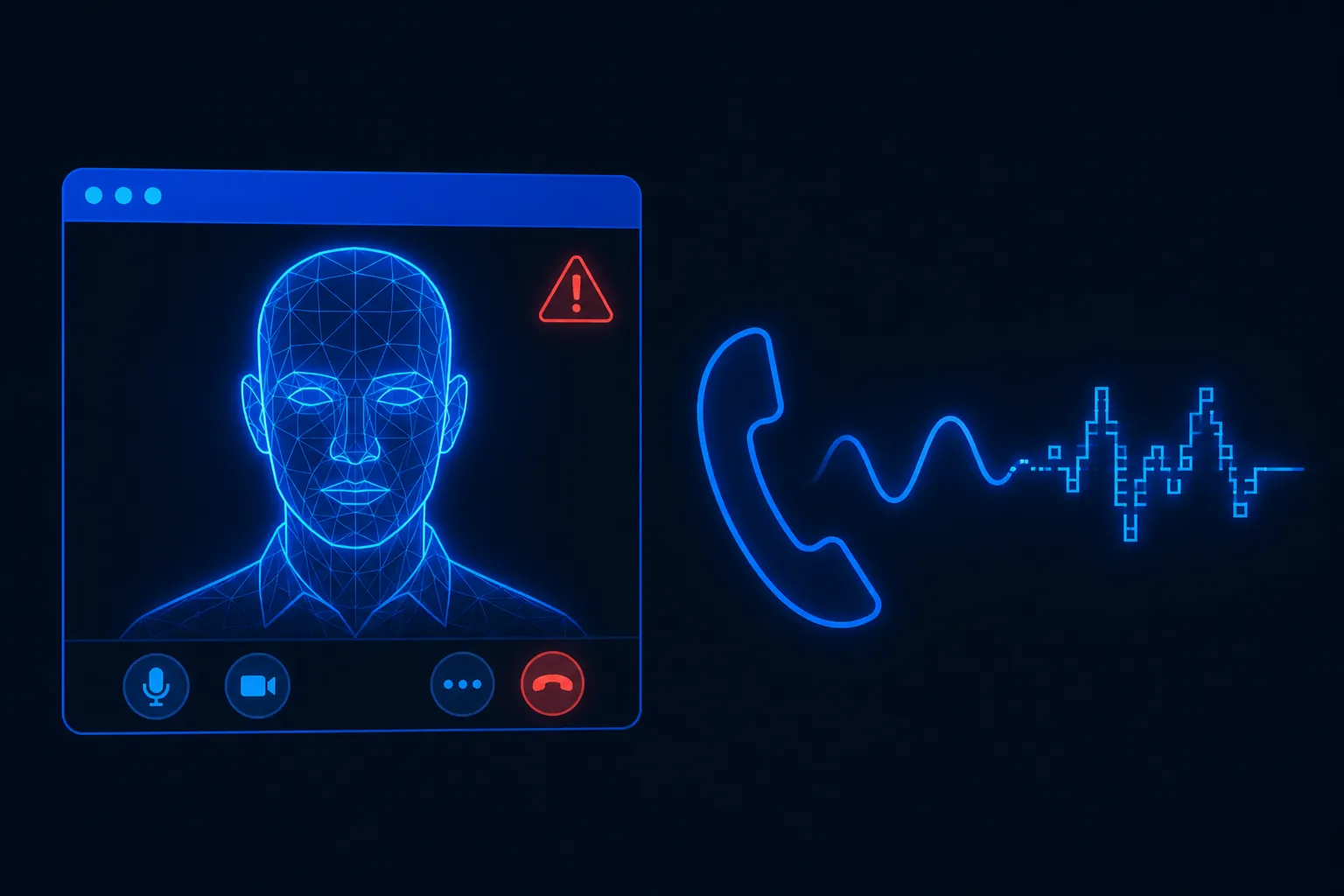
AI social engineering does not stop at text. Voice cloning now requires only a short sample of someone's speech, and real-time deepfake video has already been used in major fraud.
The most cited case is the engineering firm Arup. In January 2024, an employee in the company's Hong Kong office received a phishing message about a confidential transaction, then joined a video conference with what appeared to be the company's CFO and several colleagues. Every other participant on the call was an AI-generated deepfake built from publicly available video and audio. The employee made 15 transfers totaling roughly $25.6 million before the fraud was discovered (The Guardian).
Notice the structure of that attack: it began with a phishing message, escalated through a trusted channel, and succeeded because the human checks (recognizing a face, recognizing a voice) were the very things AI had learned to fake. No system was compromised. A person was.
The Browser: An Even Bigger Exposure
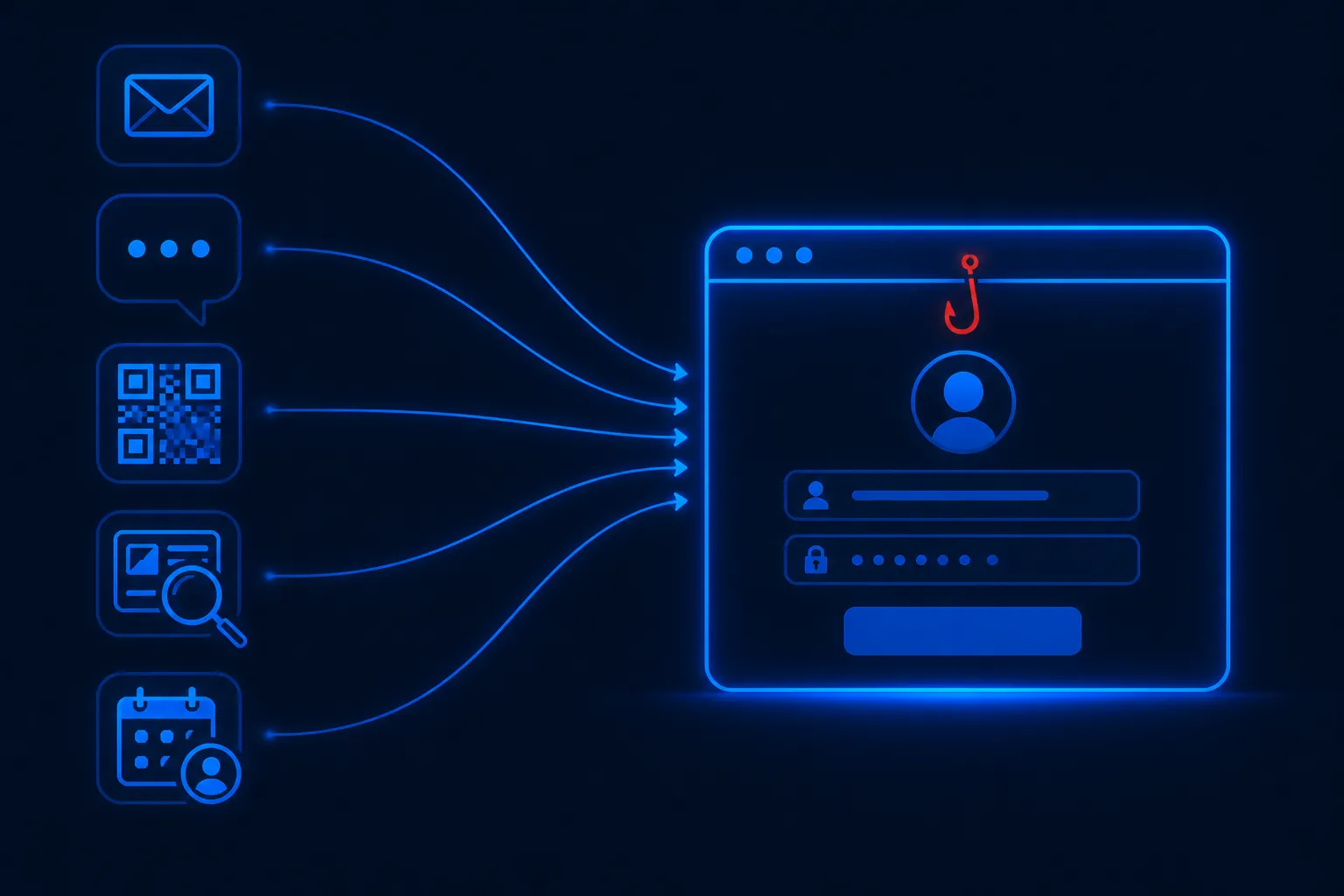
Deepfake calls make headlines, but they are still targeted, high-effort attacks. The place where AI phishing reaches every employee, every day, is far more ordinary: the browser.
Whatever channel the lure arrives through, whether email, a chat message, a search ad, a QR code, or a calendar invite, the payoff almost always happens on a web page. A fake login screen, a spoofed payment portal, a document that asks you to reauthenticate. The browser is where the credential is actually typed, and that makes it the single point every AI phishing campaign converges on.
AI has made that final step dramatically easier for attackers. Convincing clone sites and fake login pages can now be generated in minutes, hosted on fresh domains that appear faster than blocklists and reputation systems can catalog them. By the time a malicious page is flagged, the campaign has often already moved to a new one.
The exposure is structural. Employees spend most of their workday in the browser and enter credentials so routinely that a pixel-perfect fake page meets a well-practiced habit. Email security never sees this moment: the message already passed the filter, or the lure never touched email at all. Whoever is standing between the employee and that page is the actual last line of defense, which is why phishing protection cannot end at the inbox.
Why the Old Red Flags No Longer Work
A generation of security awareness advice taught employees to look for typos, awkward phrasing, strange formatting, and generic greetings. AI-generated attacks exhibit none of those signals. The message is polished, the branding is right, the context is plausible, and the sender may even be a real, compromised account.
"The tells employees were trained to look for are disappearing. The volume of credible attacks is going up. And the target has not changed: a busy person, mid-task, deciding whether a routine-looking request is real."
This does not make employees careless. It makes visual inspection an unreliable defense. Verizon's DBIR research has found that the median user clicks a phishing link within about 21 seconds of receiving it. Attackers need one convincing moment; employees are expected to make the right call every time, at speed, while doing their actual jobs. When the lure is indistinguishable from legitimate correspondence, that is not a fair fight.
How Organizations Can Respond
Defending against AI phishing means accepting that some convincing attacks will reach employees, and building layers that assume it:
- Protect at the point of decision. When a lure cannot be reliably spotted by eye, real-time phishing protection in the browser matters more: detection and intervention at the moment credentials are about to be entered, regardless of how polished the lure was. A perfect email still has to lead somewhere, and that somewhere is usually a fake page asking for something.
- Keep simulations as current as the attacks. Static template libraries cannot represent AI-generated threats. If attackers generate unique, personalized lures, phishing simulations should be generated and varied the same way, adapting to each user and to emerging techniques.
- Train in context, continuously. Annual courses age quickly when attacker tactics change monthly. Security awareness training delivered at the moment of risk keeps pace because it is driven by what is actually happening, not by what was true when the course was written.
- Verify out of band. For high-stakes requests, especially payments and credential resets, a known-good verification channel defeats even a perfect deepfake. The Arup fraud unraveled the moment the employee checked with headquarters.
- Protect people while they learn. The gap between encountering a new technique and learning to recognize it is exactly when employees are most vulnerable. Protection has to cover that gap.
The Bottom Line
AI raised the quality of attacks on people, and the data shows employees are clicking. The defense has to meet the attack at the same level: adaptive, continuous, and present at the moment of decision. That is the model behind SavvyShield's approach to human risk management: protect first, then train, and keep adapting as the attacks do.
Assess your organization’s risk to see how SavvyShield defends employees against AI-driven attacks in real time.