Human risk management
Human Risk Management Built for the Modern Attack Surface
People are the most targeted part of your organization. SavvyShield connects real-time protection, adaptive simulations, contextual training, and behavioral measurement into one continuously improving defense for the human layer.
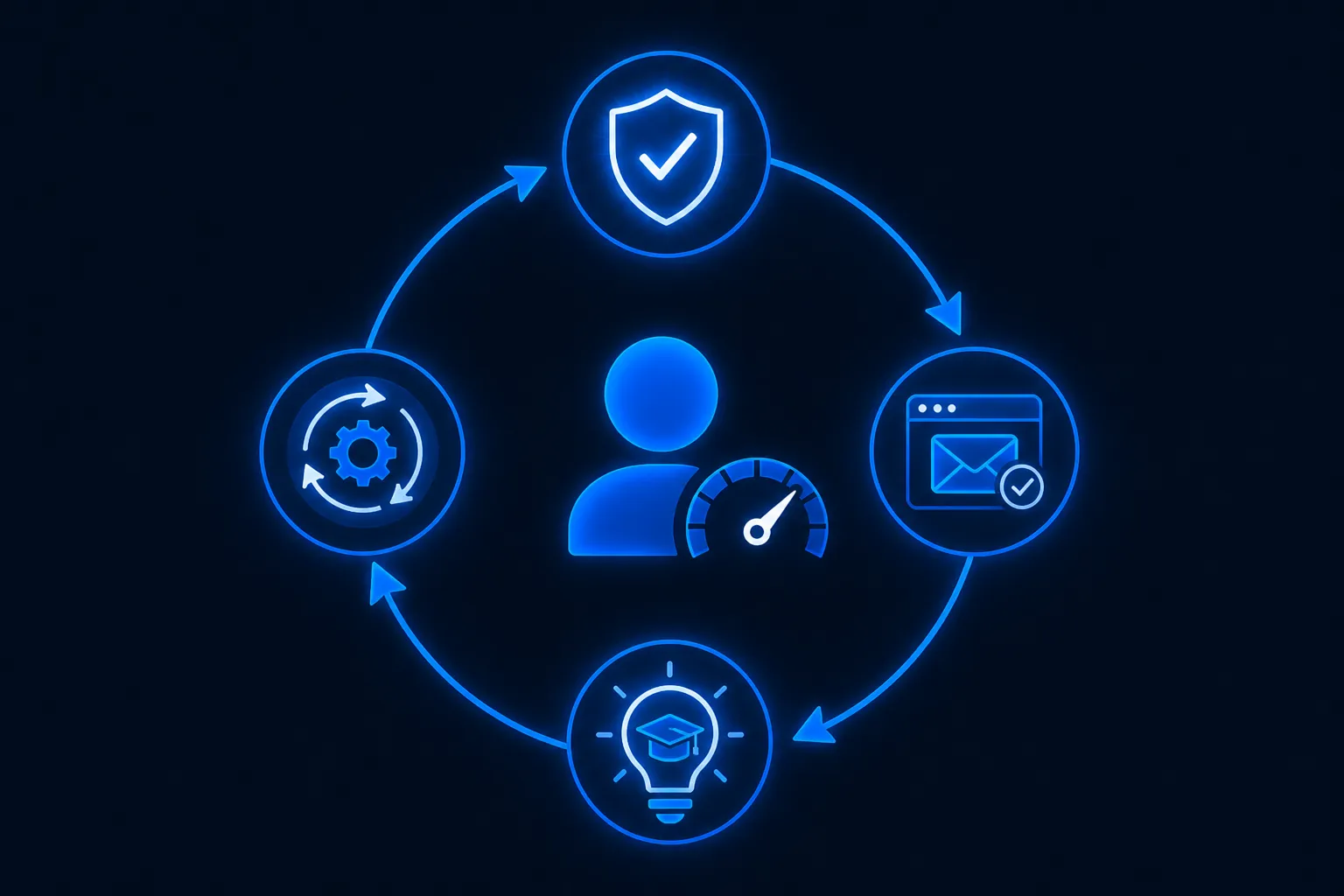
- Protect firstReal-time protection steps in on risky actions as they happen.
- Then train where it countsSimulations and short lessons aim at each person's actual weak spots.
- Measure what changedBehavioral scoring and benchmarks show whether risk is going down.
The category
What Is Human Risk Management?
Human risk management is the practice of measuring and reducing the security risk created by how people work: the links they click, the credentials they enter, the requests they trust. It treats human behavior as an attack surface to be defended, not a training topic to be scheduled.
The distinction matters because most breaches still begin with a person. Attackers target employees because people are reachable, busy, and trusting in ways that firewalls are not.
The problem
Why Awareness Alone Is Not Enough
For years, the standard answer to human risk was awareness: annual courses, periodic phishing tests, and completion dashboards. Those programs measure knowledge, but attacks exploit behavior, and the gap between knowing and doing is where incidents happen.
An employee who passed last quarter's training can still enter credentials on a convincing fake login page during a busy afternoon. Awareness programs also leave employees unprotected in the moment: if the lesson did not stick, nothing stands between the mistake and the compromise.
The SavvyShield model
Protect First, Then Train
SavvyShield approaches human risk in a specific order. Protection comes first, because the immediate priority is preventing harm. Training follows, because a risky moment that was just interrupted is the best teaching opportunity a security program will ever get.
- Protect. Real-time phishing protection steps in on suspicious websites, fake login pages, and risky actions as they happen.
- Simulate. Adaptive phishing simulations test behavior across email and the browser, automatically and continuously.
- Train. Contextual security awareness training reinforces the lesson at the moment it is most relevant.
- Adapt. Detections, simulation results, and user behavior feed back into the platform, so protection and practice keep improving.
Measurement
Behavioral Measurement That Reflects Actual Risk
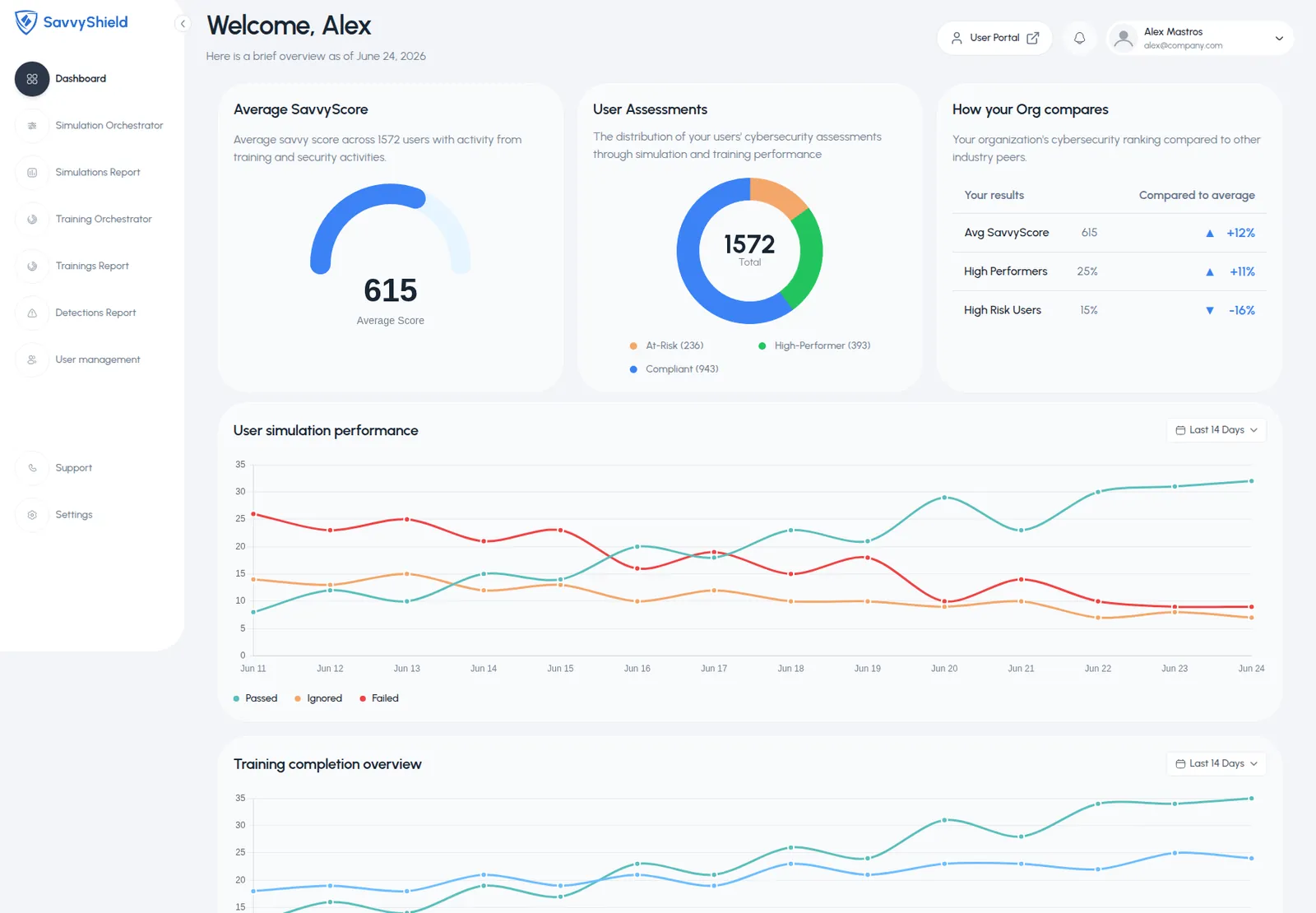
Human risk management requires knowing where risk actually lives. SavvyShield tracks behavior at the individual and organizational level: SavvyScore behavioral scoring, user assessments, organizational benchmarks, simulation performance, and training completion in one view.
Instead of reporting who watched a video, security teams can see which attack categories cause trouble, which teams are improving, and whether interventions change behavior over time. Those are the numbers that describe resilience.
The outcome
Continuous Improvement, Not Periodic Programs
Attackers iterate constantly, and AI has made their iteration faster and cheaper. A human risk program built on periodic campaigns cannot keep pace with adversaries who change tactics weekly.
SavvyShield runs as a loop instead of a calendar. Real threats inform simulations, simulations reveal weaknesses, training addresses them, and measurement confirms the change. The result is a human layer that gets stronger over time with less manual program overhead for the security team.
Explore the platform
One loop, four ways to cut human risk
Protection catches real threats, simulations test, lessons teach, and measurement shows what changed. Each part makes the next one smarter.
- Defense in real timeBlocks risky actionsSpots social engineering as it happens and steps in before the click becomes an incident.
- Short micro lessonsTrains in the momentA two-minute lesson lands right after a risky moment, tied to exactly what happened.
- Adaptive by designLearns your weak spotsAI maps where each person is exposed and aims realistic simulations right there.
- Zero workloadAutomates everythingNo campaigns, scheduling, or content calendar. Your team gets the results without the work.You are here